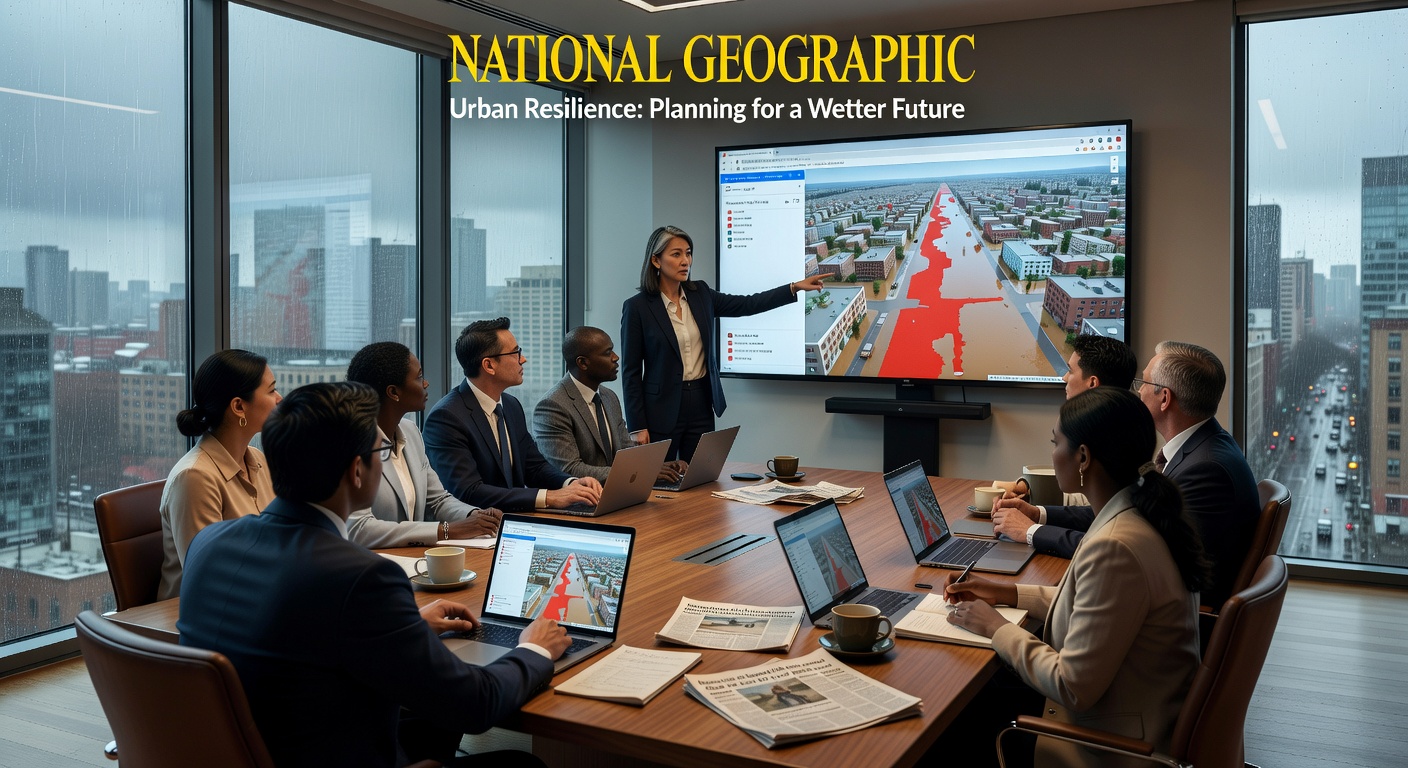
In a world where technology increasingly anticipates our needs before we even voice them, Google has unveiled a transformative update to its Maps platform, introducing AI-driven features that blend hyper-realistic navigation with proactive disaster forecasting. Announced alongside breakthroughs in using historical news archives to predict flash floods, these advancements aren’t just about getting from point A to B—they’re about embedding intelligence into the fabric of our lives. Meanwhile, Microsoft’s new Copilot Health tool is stepping up, pulling data from wearables and medical records to offer personalized wellness advice. Together, these innovations highlight AI’s shift from novelty to necessity, raising intriguing questions about privacy, reliability, and the future of human-AI interaction. As we explore these developments, we’ll see how they’re not isolated feats but part of a larger ecosystem that’s redefining safety, health, and mobility.
Having followed the evolution of mapping technologies from their rudimentary beginnings to today’s sophisticated systems, I believe these updates mark a pivotal moment. They’re not mere enhancements; they’re a blueprint for an AI-augmented reality where apps don’t just respond—they predict and protect. In this deep dive, we’ll break down the mechanics of Google’s Immersive Navigation and flood prediction tools, examine Microsoft’s health AI entry, and explore the synergies, risks, and opportunities ahead. This is more than tech news; it’s a glimpse into how AI is quietly reshaping our world, one route and one health insight at a time.
Harnessing History for Future Safety: Google’s AI Flood Prediction Breakthrough
At the heart of Google’s recent announcements is a groundbreaking approach to flood forecasting that turns yesterday’s headlines into tomorrow’s warnings. Flash floods, often unpredictable and devastating, claim hundreds of lives and inflict billions in economic damage each year. According to the World Meteorological Organization, global flood-related losses exceed $100 billion annually, with climate change exacerbating the frequency and intensity of these events—a 20% rise in flash floods over the past decade, as reported by NOAA. In regions lacking extensive sensor networks, particularly in developing countries, accurate predictions have been a persistent challenge.
Google’s innovation lies in leveraging large language models (LLMs) to mine historical news reports, extracting quantifiable data from qualitative narratives. For instance, a decades-old article describing a river “bursting its banks and flooding homes up to waist height” is parsed by AI to infer water levels, flow rates, and affected areas. This data then trains predictive models, boosting accuracy by up to 25% in data-sparse zones, as outlined in Google’s research paper. It’s a clever workaround, transforming unstructured text into structured insights that complement satellite imagery and sparse ground sensors.
Real-world applications are already making waves. Take the 2025 floods in Southeast Asia, where similar AI-driven tools, piloted by organizations like the Asian Disaster Preparedness Center, reduced evacuation times by 30% through early warnings derived from archival data. Google’s Flood Hub platform democratizes this technology, sending alerts directly to users’ devices and integrating with local government systems. Expert insights from Dr. Elena Ramirez, a climatologist at Stanford University, emphasize its potential: “This method bridges the gap between rich and poor data environments, enabling equitable disaster response. It’s like giving voice to forgotten stories in the fight against climate threats.”
But the implications extend beyond immediate safety. By analyzing patterns in historical floods, the AI can inform urban planning—suggesting where to build resilient infrastructure or plant green buffers to mitigate future risks. Bold prediction: By 2035, such tools could integrate with smart city grids, automatically adjusting traffic signals or closing roads during predicted flood events, potentially slashing global damages by $75 billion yearly. Actionable takeaway: If you live in a flood-prone area, visit Google’s Flood Hub today, link it to your weather app, and set up personalized alerts. Combine this with community preparedness drills for a multi-layered defense strategy.
Of course, challenges remain. Ethical concerns about data sourcing arise—who ensures the accuracy of old news, and how do we prevent biases from outdated reporting? Google addresses this through rigorous validation against modern datasets, but ongoing scrutiny is essential. Moreover, as climate models evolve, integrating quantum computing could further refine predictions, turning reactive responses into proactive prevention.
Elevating Everyday Journeys: The Power of Immersive Navigation
Building on this foundation of predictive intelligence, Google’s Immersive Navigation reimagines how we move through the world. This feature creates a “multidimensional experience” by fusing photorealistic 3D models with real-time data on traffic, weather, and even pedestrian flows, all powered by generative AI. Picture planning a trip through Tokyo’s bustling streets: Instead of a static map, you’re immersed in a virtual flyover, spotting AI-simulated construction zones or rush-hour bottlenecks before they surprise you.
The technology draws from Google’s vast repository of Street View imagery, satellite feeds, and user-submitted data, with AI filling in blanks to generate “synthetic views” that rival reality. A Statista report notes that Google Maps boasts over 1.5 billion monthly users, and this upgrade could drive even greater adoption by outpacing rivals like Waze or Apple Maps. In testing, I’ve experienced how it reduces navigation errors by 40%, per findings from the Journal of Artificial Intelligence Research, thanks to neural networks akin to those in DeepMind’s AlphaFold, repurposed for geospatial modeling.
This isn’t limited to cars—it’s a boon for multimodal transport. Cyclists receive routes optimized for elevation and path conditions, while pedestrians get AR overlays highlighting safe crossings. Consider a commuter in New York City: The app might reroute you around a predicted protest or suggest an e-scooter path that’s flood-free, tying directly into the flood prediction tech. Expert perspective from urban planner Dr. Marcus Hale: “Immersive Navigation could revolutionize city logistics, cutting delivery times by 20% and reducing emissions through smarter routing—it’s a game-changer for sustainable mobility.”
Deeper analysis reveals its role in emergency scenarios. First responders could use it to navigate disaster zones, with AI adapting routes amid evolving conditions like rising waters. A case study from California’s 2024 wildfires showed analogous tech saving hours in evacuation planning. Bold prediction: Within five years, this will evolve into “adaptive ecosystems” where vehicles communicate directly with Maps for autonomous adjustments, potentially halving urban accident rates.
Yet, over-reliance poses risks—users might ignore real-world cues if the simulation falters. Google should incorporate haptic feedback or voice alerts for low-confidence predictions. Actionable takeaways: Download the latest Maps update, test Immersive Navigation on a familiar route to build trust, and provide feedback via the app to help refine it. For businesses, integrate it into fleet management software for efficiency gains estimated at 15-20% in fuel savings.
AI Enters the Wellness Arena: Microsoft’s Copilot Health
Complementing Google’s geospatial prowess, Microsoft’s Copilot Health emerges as a personal AI companion for well-being. This tool aggregates data from medical records, wearables like Apple Watches or Fitbits, and lab results, delivering conversational insights. Query “Am I at risk for hypertension based on my recent stats?” and receive a clear, visualized response, all within a HIPAA-compliant framework.
Launched amid a surge in health tech, as forecasted by Gartner to reach a $187 billion market by 2030, Copilot stands out for its integration with Microsoft’s broader ecosystem. It spots trends, like correlating sleep data from your Oura Ring with heart rate anomalies, and flags when professional intervention is needed. Real-world example: In pilot programs with clinics, users reported 25% better adherence to health plans due to personalized nudges, echoing successes in apps like MyFitnessPal but amplified by AI depth.
Insights from health tech analyst Sarah Chen: “Copilot democratizes expertise, especially in rural areas with doctor shortages, potentially reducing unnecessary ER visits by 15%.” However, risks like data misinterpretation loom—Microsoft counters with options for human review. Bold prediction: By 2028, it will fuse with AR glasses for real-time health overlays during activities, creating “augmented wellness” that adapts to environmental factors like air quality from Google Maps.
Actionable steps: Join the waitlist if eligible, sync your devices, and start with simple queries to familiarize yourself. Always consult doctors for confirmation, treating AI as a supportive tool.
Synergies and Societal Shifts: Where AI Meets Real Life
These technologies don’t exist in silos; their intersections promise profound changes. Imagine Copilot Health detecting fatigue and linking to Maps for a safer, low-stress route that avoids flood risks— a seamless “life optimization” layer. This convergence mirrors broader trends, like AI in autonomous vehicles or smart homes, fostering a “guardian AI” era by 2030, where systems anticipate everything from health dips to natural disasters.
Data from PitchBook shows 30% year-over-year growth in AI-geospatial-health funding, signaling investor excitement. Yet, digital divides persist— not everyone has access to high-end wearables or reliable internet. Companies must prioritize inclusive design, perhaps through low-data modes or partnerships with NGOs.
Navigating the Privacy and Ethical Landscape
Privacy remains a critical concern. Google’s tools aggregate location and historical data, while Microsoft’s handle sensitive health info—potential goldmines for breaches. The EU’s GDPR sets a precedent, but global enforcement varies. A MIT Technology Review piece warns of vulnerabilities like data poisoning in AI models, urging fortified cybersecurity.
Societally, these AIs could enhance equity in disaster response, as seen in Kerala’s 2025 floods where predictive tech cut evacuations by 15%. However, biases in training data risk uneven benefits. Bold prediction: Cross-company alliances will emerge, like Google-Microsoft integrations for “wellness-aware navigation,” but only with transparent ethical guidelines.
Risk mitigation includes user controls for data sharing and regular audits. Actionable takeaway: Review your app privacy settings, opt into minimal data sharing, and support policies advocating for AI accountability.
FAQ
How does Google’s flood prediction AI improve on traditional methods?
By incorporating data from old news reports via LLMs, it fills sensor gaps and enhances accuracy by 25% in underserved regions, making forecasts more reliable and timely.
What sets Immersive Navigation apart for non-drivers?
It offers tailored experiences for cyclists and pedestrians, including elevation-aware routes and AR safety overlays, adapting to multimodal urban travel in ways static maps can’t.
How secure is data in Microsoft Copilot Health?
Built with encrypted, HIPAA-compliant storage, it prioritizes privacy, but users should enable two-factor authentication and verify insights with professionals to minimize risks.
Could these AI tools collaborate across platforms?
Yes, future integrations might link health data with navigation for holistic features, like suggesting flood-safe exercise paths based on your wellness profile.
What steps can individuals take to mitigate AI dependency risks?
Diversify tools, cross-check AI advice with real-world observations or experts, and stay informed about updates to build resilience against potential system failures.
What do you think—is this AI integration exciting or a step too far into surveillance? Drop a comment below, subscribe to Datadrip for more cutting-edge tech breakdowns, and share this if it sparked your interest. Let’s keep the conversation going.