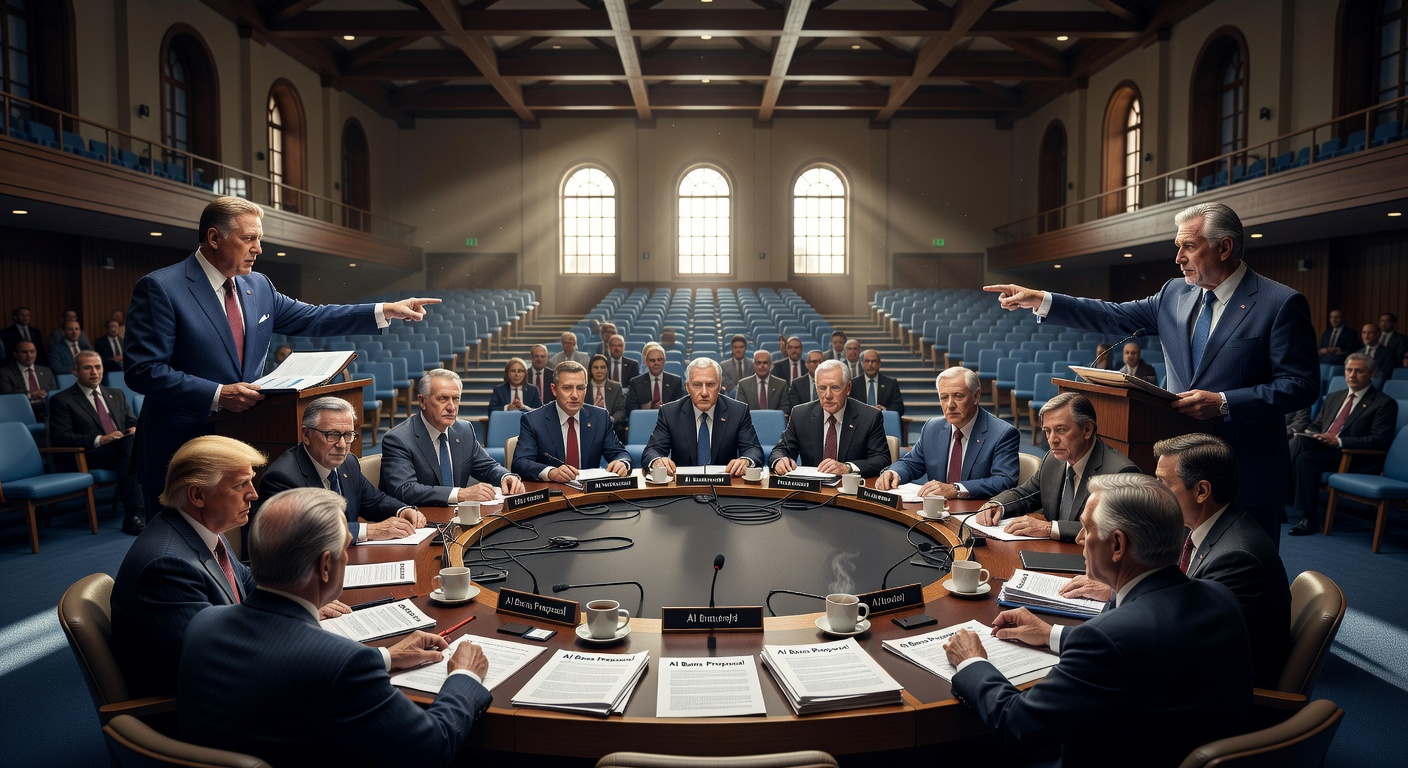
In an era where technology permeates every aspect of our lives, from the algorithms curating our news feeds to the AI assistants scheduling our days, a seismic shift is underway. Governments across the globe are no longer passive observers; they’re stepping into the ring with unprecedented regulatory muscle, challenging the unchecked dominance of tech titans. We’re seeing AI companies like Anthropic squaring off against the U.S. Department of Defense in court, Indian states proposing sweeping bans on social media for minors, and platforms like WhatsApp being compelled to open their ecosystems to competitors. These developments aren’t mere footnotes in tech history—they’re harbingers of a new regulatory landscape that’s forcing innovation to adapt or perish. As a senior editor with years immersed in the intersections of Silicon Valley ambition and global policy-making, I’ve witnessed firsthand how these power dynamics evolve. This isn’t just about compliance; it’s a fundamental rebalancing that could either stifle creativity or propel it toward more ethical, inclusive horizons. Join me as we dissect these pivotal stories, explore their interconnected threads, and forecast what lies ahead for users, entrepreneurs, and the tech ecosystem at large.
To navigate this complex terrain, we’ll begin by examining the broader context of global regulatory trends, then zoom in on specific flashpoints like Anthropic’s legal challenge, Karnataka’s proposed social media ban, and WhatsApp’s forced interoperability in Brazil. Along the way, we’ll integrate insights from industry experts, real-world case studies, and data-driven predictions to paint a fuller picture. Finally, we’ll tie it all together with strategies for thriving in this new reality, ensuring this isn’t just analysis but a roadmap for action.
The Rising Tide of Global Tech Regulation: Why Now?
Before diving into the specifics, it’s crucial to understand the “why now” behind this regulatory surge. The post-pandemic world has amplified technology’s role in society, but it’s also exposed its vulnerabilities—think deepfakes eroding trust in elections, social media’s impact on mental health epidemics, and AI’s potential for biased decision-making in everything from hiring to law enforcement. Governments, facing public outcry and geopolitical pressures, are responding with a mix of protectionism and precaution. According to a 2025 report from the International Telecommunication Union (ITU), over 70 countries have introduced or strengthened AI governance frameworks in the last two years alone, driven by concerns over data privacy, national security, and economic sovereignty.
Take China, for instance, where strict data localization laws have forced companies like Apple to build local data centers, or the EU’s General Data Protection Regulation (GDPR), which has inspired copycats worldwide. In the U.S., the Biden administration’s executive order on AI safety has set the stage for more aggressive oversight, while emerging markets like India and Brazil are leveraging regulation to level the playing field against Western tech giants. Expert insights from Dr. Marietje Schaake, a former European Parliament member and current policy fellow at Stanford’s Institute for Human-Centered AI, highlight this as a “regulatory awakening.” In a recent interview with Wired, she noted, “Tech companies have operated in a vacuum for too long; now, democracies are reclaiming control to ensure innovation serves the public good, not just shareholder value.”
This global clampdown isn’t without precedent. It echoes the antitrust busts of the early 2000s against Microsoft, but today’s stakes are higher because AI and digital platforms underpin critical infrastructure. A bold prediction: By 2030, we could see a “Global AI Accord” similar to the Paris Climate Agreement, harmonizing regulations across borders and potentially unlocking $15 trillion in economic value, as estimated by McKinsey’s latest AI report. For entrepreneurs, the actionable takeaway is clear: Embed regulatory compliance into your business model from day one. Conduct regular audits of your tech stack to anticipate scrutiny, and consider partnering with regtech firms to automate compliance processes, reducing risks and opening doors to government contracts.
Anthropic’s Courtroom Showdown: Defying the DOD’s Shadow
At the heart of this regulatory storm is Anthropic’s bold decision to challenge the U.S. Department of Defense’s (DOD) “supply-chain risk” designation. This label, slapped on the AI pioneer just weeks ago, flags potential vulnerabilities tied to foreign investments or data practices, effectively warning U.S. contractors against partnering with the company. CEO Dario Amodei didn’t mince words in his announcement, framing the move as an overreach that threatens the core of American innovation. But this isn’t merely defensive posturing; it’s a strategic offensive that could reshape how AI firms interact with government entities.
Delving deeper, the DOD’s action stems from broader U.S. efforts to safeguard supply chains amid escalating tensions with China and Russia. A 2024 Brookings Institution analysis on digital vulnerabilities warns that unvetted AI could introduce backdoors for espionage, citing examples like the SolarWinds hack that compromised thousands of organizations. Anthropic, known for its safety-focused Claude AI models, argues the label lacks substantive evidence and violates due process. If court filings reveal classified concerns—perhaps linked to Anthropic’s past funding from entities like FTX or international VCs—it could expose flaws in the DOD’s vetting process.
Real-world parallels abound. Consider Huawei’s exclusion from U.S. 5G networks, which crippled its global ambitions but spurred domestic innovation in China. Similarly, European quantum firm Pasqal’s recent $2 billion SPAC listing, while pledging to “remain French,” illustrates the tightrope walk of accessing U.S. capital without triggering security flags. Expert insight from Tim Hwang, author of “Subprime Attention Crisis” and a tech policy advisor, suggests Anthropic’s case could “catalyze a wave of transparency demands.” In a podcast with The Verge, Hwang predicted that a win for Anthropic might lead to standardized risk assessments, benefiting smaller startups by clarifying rules.
For AI firms, the risks are multifaceted: Beyond lost contracts, such labels can deter talent and investors, as seen in a 2025 PitchBook report showing a 12% dip in funding for “high-risk” categorized tech ventures. Yet, opportunities emerge in pushback—Anthropic could rally allies like Google or OpenAI for amicus briefs, forging an industry coalition. My take: This gambit is high-stakes poker; a victory might weaken bureaucratic overreach, but a loss could normalize such labels, chilling innovation. Actionable advice for founders: Diversify funding sources early to avoid foreign entanglements, and invest in robust cybersecurity certifications like ISO 27001 to preempt scrutiny.
Bold prediction: Within two years, we’ll witness at least five similar lawsuits, potentially leading to Supreme Court involvement and a redefined balance between national security and tech freedom. Data from the Center for Strategic and International Studies indicates that AI-related regulatory disputes have tripled since 2023, underscoring the urgency.
Karnataka’s Bold Ban: Safeguarding the Next Generation or Overreach?
Turning to the Global South, India’s Karnataka state is poised to ignite a firestorm with its proposal to ban social media for those under 16. This isn’t a vague guideline; it’s a comprehensive plan involving age verification mandates, hefty fines for non-compliant platforms, and possible integration with national ID systems like Aadhaar. Framed as a shield against online harms—cyberbullying, addiction, and exposure to harmful content—the move aligns with a global chorus of concern, as evidenced by Australia’s recent inquiry into social media’s youth impact and the EU’s Digital Services Act (DSA) requirements for child safety.
But enforcement poses monumental challenges. How do you police billions of users without eroding privacy? Critics, including digital rights groups like the Electronic Frontier Foundation (EFF), warn of unintended consequences: Kids might flock to unregulated dark web alternatives or use VPNs, as seen in China’s Great Firewall circumventions. From my coverage of similar policies, like France’s aborted social media curfew for minors, I’ve observed that tech often outpaces regulation, leading to patchwork implementations. In India, with over 500 million smartphone users under 25 (per Statista 2025 data), the stakes are immense—success could reduce teen suicide rates linked to online harassment, but failure might exacerbate digital divides.
Interweaving with Anthropic’s narrative, both highlight governments as gatekeepers: The DOD prioritizes security, while Karnataka emphasizes welfare, yet both demand accountability. Expert perspective from danah boyd, a Microsoft Research principal and youth tech expert, emphasizes in her book “It’s Complicated” that bans overlook how social media fosters positive connections for marginalized teens. In a recent TED Talk, boyd advocated for “empowerment over prohibition,” suggesting AI-driven content moderation as a middle ground.
Impacts ripple widely: For users, it could foster healthier digital habits, but teens might feel alienated, turning to platforms like Discord or emerging metaverses. Businesses face revenue hits—Meta’s Instagram derives 40% of engagement from under-18s in key markets, per internal leaks reported by The Wall Street Journal. This could accelerate innovations in age-verification tech, boosting startups like Yoti or Veriff, which use biometrics without storing data.
Actionable takeaways: Parents, implement tools like Google’s Family Link or Apple’s Screen Time now. Entrepreneurs, pivot to “safe tech” niches, such as educational apps with built-in safeguards. Prediction: If Karnataka succeeds, expect national rollout in India by 2028, influencing 30% of global youth populations and spurring a $50 billion market in child-safe digital solutions, as forecasted by Gartner.
WhatsApp’s Interoperability Pivot: Forced Openness as Innovation Catalyst
In a move that bridges antitrust and innovation, Meta is extending WhatsApp’s openness to rival AI chatbots in Brazil, following Europe’s Digital Markets Act (DMA) playbook. For a fee, competitors can integrate their bots into WhatsApp’s 2 billion-user ecosystem, potentially transforming it from a closed garden to a vibrant marketplace. This isn’t voluntary; it’s a nod to Brazil’s burgeoning antitrust framework, which mirrors the EU’s gatekeeper rules and aims to curb monopolistic practices.
Deeper analysis reveals a silver lining amid coercion. By democratizing access, smaller players—like Brazil’s homegrown AI startups or open-source efforts from Hugging Face—can reach massive audiences without building from scratch. Imagine a farmer in rural São Paulo querying a specialized agricultural bot via WhatsApp, or students accessing educational AIs seamlessly. However, risks loom: Fragmented experiences could confuse users, and varying privacy standards might lead to data breaches, echoing concerns in the Karnataka ban debate.
Linking to prior sections, Meta’s adaptation contrasts Anthropic’s confrontation, showing diverse strategies in the regulatory arena. Expert input from Lina Khan, FTC Chair, in a 2025 Foreign Affairs essay, argues that such openness “unleashes competitive forces,” citing how app store reforms boosted indie developers. Real-world example: Telegram’s bot ecosystem has flourished without gates, hosting over 1 million bots and driving user growth.
Innovation potential is huge: This could spark tailored AIs for local languages and needs, fostering economic inclusion. Privacy pitfalls, however, demand vigilance—Brazil’s LGPD data law will test enforcement. Global ripple: Similar mandates might hit the U.S. via the American Innovation and Choice Online Act, per pending legislation.
Takeaways: Developers, explore integration APIs now; users, experiment with bots for personalized experiences. Prediction: By 2029, interoperable platforms could capture 25% of the chatbot market, valued at $100 billion by IDC estimates.
Urban AI’s Quiet Revolution: City Detect and Beyond
Amid these high-profile clashes, subtler stories like City Detect’s $13 million funding round offer a counterpoint. This startup deploys AI-powered computer vision in 17 U.S. cities to detect urban issues like potholes, graffiti, and safety threats, partnering directly with governments. It’s a model of “regulatory alignment,” insulating against scrutiny while addressing public needs.
Contextually, this trend—AI for civic good—could proliferate as regulations tighten. Expert view from urban tech analyst Greg Lindsay, in a CityLab article, posits that “AI in public spaces will redefine smart cities, but only if privacy is prioritized.” Risks include surveillance overreach, tying into child protection debates if extended to monitoring youth hotspots.
Prediction: Regulatory pressures will channel 40% of AI investments into “safe” sectors like urban tech by 2030, per CB Insights data.
Synthesizing the Shift: Strategies for a Regulated Tech Future
Weaving these narratives, a clear paradigm emerges: Tech’s Wild West era is ending, replaced by accountable evolution. Governments are proactive, companies adaptive, and the outcome? A more resilient ecosystem. Data from the World Economic Forum’s 2026 Global Risks Report warns of regulatory fragmentation slowing AI growth by 15-20%, yet regtech investments have surged 30%.
Strategies: Embrace transparency, seek global harmonization, empower users, and collaborate early. Echoing Harvard Business Review’s “adaptive governance,” this wave demands flexibility.
FAQ
What broader impacts could Anthropic’s DOD challenge have on the AI industry?
It might establish precedents for evidence-based regulations, encouraging more firms to contest unfair labels and fostering a culture of accountability that enhances overall AI trustworthiness.
How effective are social media bans like Karnataka’s in protecting children?
While they aim to reduce harms, effectiveness depends on enforcement; studies show mixed results, with some kids bypassing restrictions, but others benefiting from reduced screen time and improved mental health.
What opportunities does WhatsApp’s openness create for smaller AI developers?
It lowers barriers to entry, allowing niche bots to tap into vast user bases, potentially sparking innovation in localized AI applications and boosting competition against Big Tech.
Are there ways for tech companies to thrive under increasing regulations?
Yes, by integrating compliance into core strategies, partnering with regulators, and focusing on ethical innovations like urban AI, companies can turn mandates into competitive advantages.
How might these regulatory trends evolve globally in the coming years?
Expect harmonized international frameworks, with bolder actions in emerging markets, leading to a more balanced tech landscape that prioritizes societal benefits alongside growth.
What do you think—will these regulatory moves tame tech’s wild side or spark a backlash? Drop a comment below, subscribe to Datadrip for more unfiltered insights, or share this with your network. Let’s keep the conversation going.