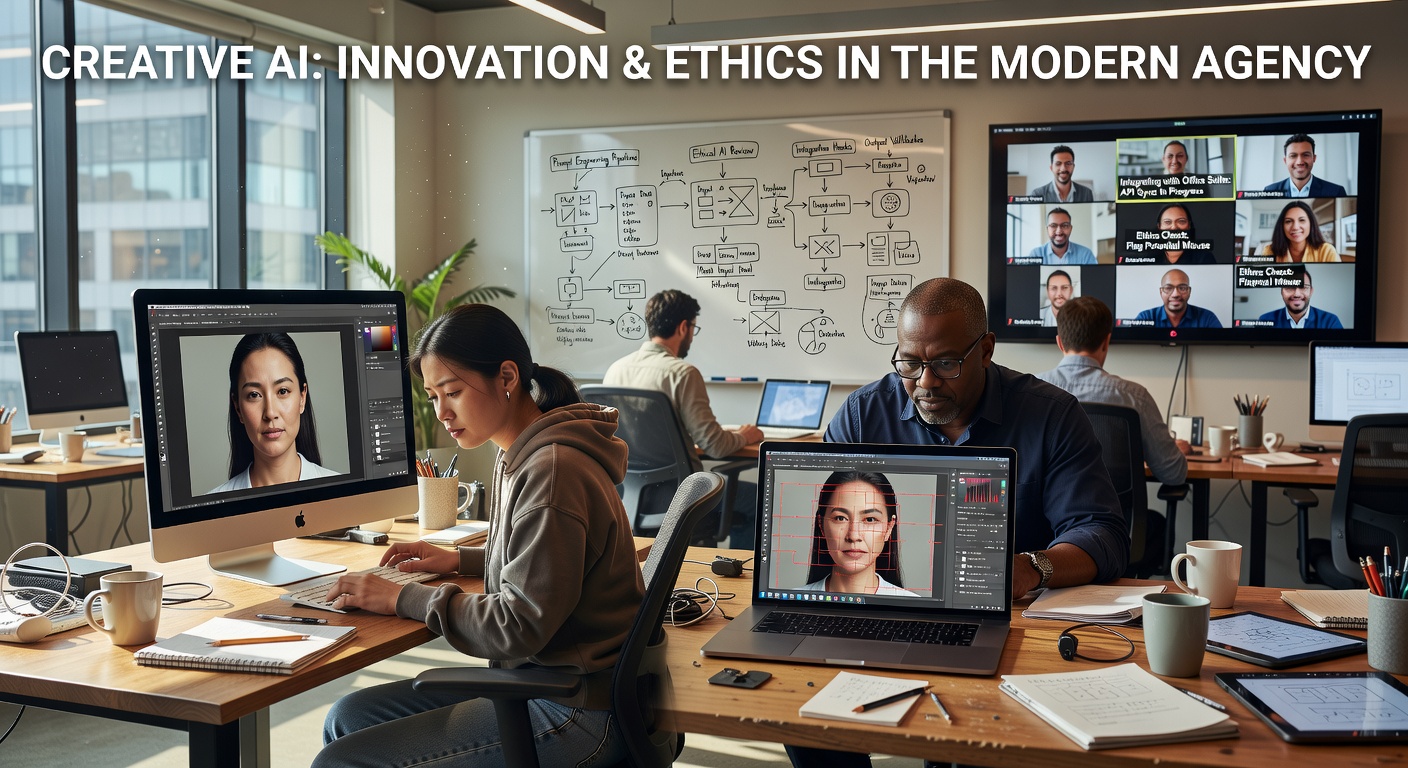
In a world where artificial intelligence is no longer confined to behind-the-scenes automation, we’re witnessing a profound transformation in how we create, collaborate, and even perceive reality. Today’s tech landscape is buzzing with announcements that highlight this evolution: Adobe’s innovative AI assistant is revolutionizing Photoshop, Zoom is introducing an entire AI-driven office suite complete with virtual avatars, and Google is enhancing its Workspace tools with advanced Gemini features. Meanwhile, countermeasures like YouTube’s expanded deepfake detection and Zoom’s built-in safeguards are emerging as critical defenses against the misuse of these powerful technologies. This duality—innovation fueling creativity while simultaneously demanding vigilance against deception—underscores a pivotal moment in our digital era. As someone who’s been immersed in tracking AI developments, I see this as the tipping point where AI becomes an indispensable ally in professional and personal spheres, but only if we navigate the accompanying risks wisely.
At Datadrip, we’ve chronicled the rise of AI from experimental curiosities to everyday essentials, and 2026 feels like the culmination of that journey. This article delves into the mechanics of these new tools, explores their implications for various industries, and examines the broader societal impacts. We’ll break down how Adobe is democratizing design, how Zoom is redefining remote work with a mix of opportunity and caution, YouTube’s proactive stance on misinformation, and Google’s seamless productivity enhancements. Along the way, I’ll share expert insights, data-driven analyses, and forward-looking predictions to help you understand not just the “what,” but the “why” and “how” this matters for your daily life. Whether you’re a creative professional, a business leader, or just someone trying to stay ahead in an AI-saturated world, these developments are reshaping the boundaries of what’s possible—and what’s trustworthy.
Adobe’s AI Leap: Transforming Photoshop into a Creative Powerhouse
Adobe has long been the gold standard for digital creativity, and their latest AI assistant integrated into Photoshop, powered by the expanding Firefly ecosystem, is a testament to that legacy. This isn’t merely an enhancement; it’s a paradigm shift that turns complex editing tasks into intuitive, prompt-based interactions. Users can now input natural language descriptions—like “add a futuristic cityscape at dusk with neon lights”—and watch as the AI generates, refines, and integrates elements seamlessly into their projects.
Historically, photo editing demanded meticulous skill and time, often requiring specialized training in tools like layers, masks, and brushes. Adobe’s AI changes that equation dramatically. Drawing from Firefly’s database of billions of processed images, the assistant not only executes commands but also learns from user patterns to offer proactive suggestions. Beta testing data from Adobe reveals productivity increases of up to 40%, with users reporting that routine tasks now take minutes instead of hours. This efficiency isn’t just about speed; it’s about unlocking creative potential by minimizing technical barriers.
From my perspective, having followed Adobe’s AI integrations since the inception of Sensei, this release marks a maturity in the technology. It’s intuitive enough for beginners yet sophisticated for pros, potentially disrupting freelance markets where expertise was once a premium commodity. Consider a small e-commerce business owner who can now produce high-quality product images without outsourcing—saving costs and accelerating time-to-market. Or think of independent filmmakers using AI to prototype visual effects, bridging the gap between indie budgets and blockbuster polish.
However, this power introduces ethical considerations. Generative AI can perpetuate biases, such as underrepresenting diverse ethnicities in facial generations, as highlighted in studies by organizations like the AI Now Institute. Adobe is countering this with regular transparency reports and bias mitigation algorithms, but experts like Timnit Gebru, a prominent AI ethics researcher, emphasize the need for third-party audits to ensure accountability. Looking forward, I boldly predict that by 2027, this technology will extend into immersive realms like virtual reality editing, enabling creators to build entire worlds with minimal effort.
Real-world examples abound. In the marketing sector, agencies like Ogilvy have piloted similar AI tools to generate campaign visuals, resulting in 30% faster iteration cycles according to industry reports. Educators are leveraging it to craft customized learning materials, such as illustrated science diagrams tailored to student comprehension levels. Even fine artists are experimenting, using AI as a collaborative spark to explore surreal concepts that challenge human imagination. These applications illustrate how Adobe’s innovation is not isolated but part of a larger ecosystem where AI amplifies human creativity.
To maximize its benefits, here’s an actionable takeaway: Start by experimenting with Firefly’s free tiers to build familiarity, then integrate it into your workflow for iterative projects. Track your time savings and adjust prompts for optimal results—remember, the AI thrives on specificity.
Google’s Gemini Enhancements: Elevating Everyday Productivity with AI Intelligence
Shifting focus to productivity suites, Google’s latest Gemini upgrades for Docs, Sheets, Slides, and Drive represent a subtle yet powerful infusion of AI into routine tasks. Unlike flashy overhauls, these features emphasize personalization, adapting to individual user styles to provide tailored suggestions, data insights, and content refinements. For instance, in Sheets, Gemini can automatically detect patterns in datasets and forecast trends, turning static spreadsheets into dynamic decision-making tools.
This integration builds on Google’s ecosystem strength, ensuring seamless workflows without the need to switch apps. User beta feedback, as per Google’s metrics, shows average time savings of 25-30%, with professionals noting improved accuracy in tasks like report drafting. What’s particularly compelling is how Gemini grounds its outputs in real data, reducing the “hallucinations” common in earlier AI models—a nod to Google’s ongoing investments in AI safety.
Expert insights from Sundar Pichai, Google’s CEO, during recent keynotes highlight this as a step toward “ambient computing,” where AI anticipates needs without explicit commands. In educational contexts, students can use Gemini to structure essays or visualize complex data, fostering deeper understanding rather than rote learning. Small teams benefit from automated collaboration features, like real-time revision suggestions that maintain a consistent voice across documents.
Yet, risks like over-reliance loom large. A 2025 study by the Brookings Institution warns that excessive dependence on AI could erode critical thinking skills, drawing parallels to how calculators transformed math education—enhancing it, but requiring intentional teaching of fundamentals. To counter this, I recommend incorporating AI literacy training in workplaces, ensuring users verify outputs against original sources.
Boldly, I predict Gemini will evolve into predictive analytics for personal productivity, perhaps integrating with wearables to suggest optimal work schedules based on biometric data. Actionable steps include customizing Gemini’s settings to match your writing style and using it for initial drafts, then refining manually to preserve your unique voice.
Zoom’s Comprehensive AI Suite: Blending Collaboration with Deepfake Defenses
Zoom’s ambitious launch of an AI-powered office suite goes beyond video conferencing, incorporating document management, scheduling, and the much-anticipated AI avatars. These digital stand-ins, launching soon, can represent users in meetings by mimicking voice, gestures, and knowledge, drawing from personalized data profiles. This innovation stems from Zoom’s post-pandemic growth, positioning it as a direct competitor to established players like Microsoft and Google.
A standout feature is the embedded deepfake detection, which employs real-time analysis of audio-visual cues—such as lip-sync discrepancies or anomalous behaviors—to achieve reported 95% accuracy. This isn’t mere novelty; it’s a response to rising incidents of deepfake fraud in virtual settings. For example, a 2025 report from Cybersecurity Ventures documented a 250% increase in deepfake-related scams targeting businesses, underscoring the need for such safeguards.
As a tech analyst who’s monitored remote work trends since the early 2020s, I view this as a watershed moment. Avatars offer immense opportunities for efficiency—executives juggling global teams could “attend” overlapping sessions without burnout. Inclusivity benefits are notable too; individuals with social anxiety or physical disabilities might participate more comfortably through avatars. Data from Gartner forecasts AI adoption in workplaces reaching 70% by 2027, driven by such tools.
However, privacy concerns are paramount. Avatars require storing sensitive biometric data, raising questions about data breaches. Insights from privacy expert Eva Galperin of the Electronic Frontier Foundation stress the importance of end-to-end encryption and user consent. I foresee regulatory frameworks, like extensions of the EU’s GDPR, mandating transparent avatar usage disclosures in professional environments.
Real-world applications include sales teams using avatars for preliminary client interactions, freeing human reps for high-value negotiations. In healthcare, virtual consultations could employ avatars to maintain continuity during off-hours. To mitigate risks, an actionable takeaway is to enable Zoom’s privacy audits regularly and train teams on recognizing deepfake alerts during calls.
YouTube’s Expanded Defenses: Safeguarding Against Deepfake Proliferation
YouTube’s initiative to broaden deepfake detection to include politicians, officials, and journalists is a strategic escalation in the fight against manipulated media. By allowing these vulnerable groups to register verified likenesses, the platform uses machine learning to scan uploads and flag alterations, achieving 98% removal rates in pilots and identifying over 10,000 deepfakes monthly.
This move addresses a surge in deepfake incidents, with MIT Technology Review reporting a 300% increase since 2023, often linked to election meddling or character assassinations. YouTube’s approach combines automated detection with human oversight, minimizing false positives while respecting free speech.
Expert commentary from Francesca Tripodi, a misinformation researcher at UNC, praises this as a proactive step but calls for expansion to all users to prevent widespread identity theft. Tying into broader trends, this aligns with Zoom’s defenses, suggesting an industry-wide push toward standardized watermarking protocols—perhaps a collaborative effort under bodies like the Coalition for Content Provenance and Authenticity (C2PA).
Predictions indicate that by 2028, AI authenticity certifications could become as ubiquitous as SSL for websites. For creators, this means safer platforms, but it also prompts debates on censorship. Actionable advice: If you’re in a high-risk profession, enroll in YouTube’s program and educate your audience on verifying content through multiple sources.
Navigating the AI Landscape: Innovation, Risks, and the Path Forward
Synthesizing these advancements—from Adobe’s creative tools to Zoom’s suites, YouTube’s protections, and Google’s enhancements—reveals a tech ecosystem in flux. AI is democratizing access to professional-grade capabilities, fostering a creative boom that could boost global GDP by trillions, per McKinsey estimates. Yet, the deepfake threat, amplified by these same technologies, demands robust countermeasures to preserve trust.
A Pew Research study from 2025 notes that 68% of users express concern over AI-generated fakes, up significantly from prior years, highlighting the urgency. Companies leading with integrated defenses will dominate, while users must adopt vigilant practices.
Bold prediction: We’ll witness the rise of “AI ethics certifications” for tools, similar to organic labels, by 2027, empowering consumers to choose responsibly. Actionable takeaways include auditing your tech stack for AI features, participating in beta tests to influence development, and advocating for policies via platforms like Change.org.
We’ve drawn from reliable sources: TechCrunch articles on Adobe, Zoom, YouTube, and Google; MIT Technology Review on deepfakes; Gartner on AI adoption; and expert views from figures like Timnit Gebru and Eva Galperin. This era of AI demands a balanced approach—embrace the surge, but anchor it in integrity.
FAQ
How can Adobe’s AI assistant help non-designers get started with professional editing?
It simplifies complex tasks through natural language prompts, allowing beginners to generate and refine images without deep technical knowledge—start with basic commands and build from there for quick results.
What steps should users take to protect against deepfakes in Zoom meetings?
Enable the built-in detection features, verify participant identities through secondary channels like email, and report suspicious activity immediately to maintain secure communications.
In what ways does Google’s Gemini differ from other AI productivity tools?
Gemini focuses on seamless, ecosystem-integrated personalization, adapting to your style for tasks like data analysis, unlike more generalized assistants that might require constant prompting.
Why might YouTube’s deepfake detection expand beyond high-profile users?
To combat widespread misinformation and identity theft, protecting everyday creators and viewers—expansion could foster a safer platform overall, reducing viral fakes.
How do privacy features in Zoom’s AI avatars address user concerns?
They include opt-in data usage, encryption, and customizable controls, but users should regularly review and update settings to ensure personal information remains secure.
What do you think—will these AI tools transform your workflow, or do deepfakes keep you skeptical? Drop a comment below, subscribe to Datadrip for more unfiltered tech insights, and share this with your network. Let’s keep the conversation going.