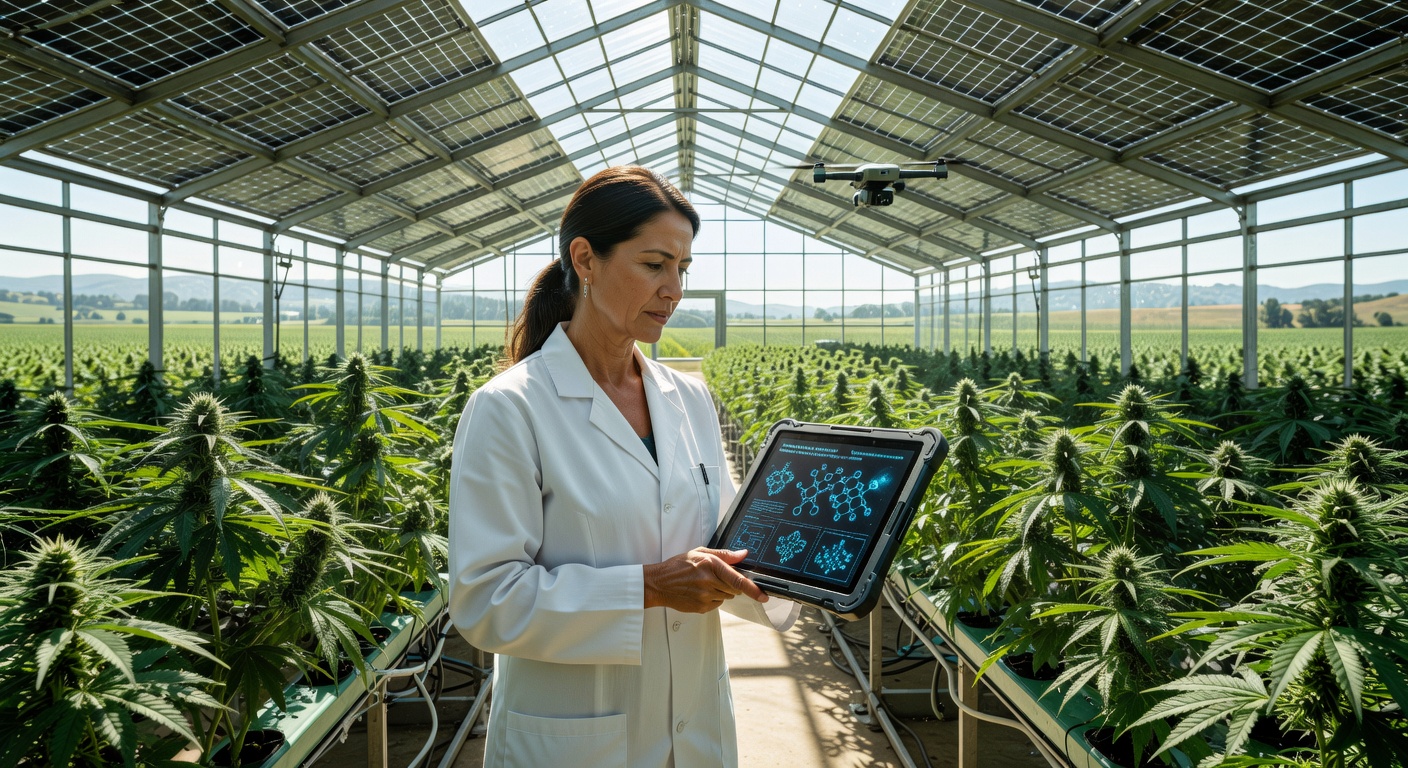
In the whirlwind of tech headlines dominated by regulatory battles and corporate intrigue, a more profound shift is unfolding: AI is weaving itself into the fabric of environmental and health solutions. This week alone, a $25 million infusion into an AI-driven drug discovery firm and Meta’s ambitious solar energy acquisition underscore how artificial intelligence is no longer confined to digital novelties. Instead, it’s powering tangible advancements in combating climate change and disease, from methane-reducing algorithms in Asian farmlands to predictive models in pharmaceutical pipelines. As someone who’s spent years dissecting these trends, I see this as the dawn of AI’s green era—a movement that’s equal parts promise and peril, demanding we look beyond the buzz to its real-world stakes.
These developments aren’t isolated; they’re part of a broader convergence where AI intersects with biology, energy, and agriculture to address humanity’s most pressing crises. Converge Bio’s funding haul, Meta’s renewable energy pivot, and initiatives like Mitti Labs’ farm tech represent a trifecta of innovation that’s reshaping industries. But beneath the optimism lies a question: Can AI truly deliver on its eco-hero potential, or will its own resource demands undermine the progress? Let’s dive deeper into these stories, exploring their mechanics, implications, and the interconnected web they form.
AI on the Ground: Transforming Agriculture and Cutting Emissions
Let’s begin where the rubber meets the road—or rather, where algorithms meet the soil. In the vast rice paddies of India, which produce a significant chunk of the world’s staple crop, AI is quietly revolutionizing sustainable farming. Startups like Mitti Labs are at the forefront, collaborating with organizations such as The Nature Conservancy to deploy machine learning tools that target methane emissions, a potent greenhouse gas contributing to about 8% of global anthropogenic methane according to the IPCC. Rice cultivation, particularly through traditional flooding methods, releases methane as bacteria break down organic matter in anaerobic conditions. Mitti’s AI platform analyzes satellite imagery, soil sensors, and farmer-reported data to recommend optimized watering schedules, such as alternate wetting and drying techniques that can slash emissions by up to 50%.
This isn’t just environmental altruism; it’s economically savvy. By verifying reductions through AI-driven data validation, Mitti enables farmers to generate and sell carbon credits on international markets. Imagine a smallholder in rural Punjab using a simple mobile app to upload field data, which an AI model cross-references with blockchain for transparency and trustworthiness. Early pilots in Southeast Asia have shown not only emission cuts but also yield improvements of 10-20%, as better water management reduces crop stress during droughts—a growing threat amid climate volatility.
To appreciate the scale, consider the global context: Agriculture accounts for roughly 24% of greenhouse gas emissions worldwide, per the FAO. AI’s role extends beyond methane; companies like Farmers Edge use predictive analytics to forecast pest invasions or nutrient needs, minimizing pesticide use and fertilizer runoff that pollutes waterways. In Brazil’s soy fields, AI-powered drones from startups like TerrAvion monitor crop health in real-time, optimizing inputs and boosting efficiency. Expert insights from agronomists at the World Resources Institute highlight how these tools could help feed a projected 9.7 billion people by 2050 without expanding farmland, preserving biodiversity hotspots.
Yet, challenges persist. Digital divides in developing regions mean not all farmers have access to smartphones or reliable internet, potentially widening inequalities. There’s also the risk of over-reliance on AI, where models trained on biased data fail during unprecedented weather events. My prediction: By 2028, we’ll see AI-agriculture consortia forming public-private partnerships to subsidize tech for underserved farmers, turning potential pitfalls into inclusive growth engines. For readers eyeing this space, actionable takeaways include investing in agtech ETFs or piloting AI tools on small plots if you’re in farming—always starting with open-source options to test viability.
The Funding Wave: AI’s Biotech Boom with Converge Bio Leading the Charge
Shifting to the lab, the intersection of AI and biotechnology is heating up, exemplified by Converge Bio’s recent $25 million Series A funding. Led by Bessemer Venture Partners and bolstered by executives from Meta, OpenAI, and Wiz, this investment isn’t mere speculation—it’s a vote of confidence in AI’s ability to overhaul drug discovery. Traditional pharmaceutical R&D is notoriously slow and costly, with timelines stretching over a decade and failure rates hovering at 90%. Converge Bio’s platform harnesses generative AI and machine learning to simulate molecular interactions, predict drug efficacy, and even design novel compounds, potentially compressing development cycles by 70%.
Drawing from successes like AlphaFold’s protein-folding breakthroughs, Converge integrates vast genomic datasets with AI algorithms to model how drugs bind to targets. For instance, in oncology, it could forecast a compound’s impact on mutated proteins before physical synthesis, reducing waste and animal testing. Real-world parallels include Insilico Medicine’s AI-designed drug entering Phase II trials for idiopathic pulmonary fibrosis in record time, or Recursion Pharmaceuticals’ use of AI to repurpose existing drugs for rare diseases.
The significance amplifies in our post-pandemic world, where emerging threats like antimicrobial resistance—projected to cause 10 million deaths annually by 2050, per WHO estimates—demand faster innovation. Converge’s approach could democratize access, slashing the $2.6 billion average cost per drug (as reported by the Tufts Center) and enabling treatments for neglected tropical diseases in low-income countries. Expert voices, such as those from MIT’s Regina Barzilay, emphasize AI’s potential in personalized medicine, where models analyze individual genomes to tailor therapies, much like how CRISPR editing is enhanced by predictive AI.
Ripple effects abound: Faster cures for rare conditions, where small patient cohorts deter Big Pharma; integration with wearables for real-time health monitoring; and ethical gains by minimizing animal trials. However, data privacy looms large—whose genetic information trains these models? Biases in datasets could perpetuate disparities, as seen in past AI health tools favoring certain demographics. With backers versed in ethical AI, Converge might pioneer transparent frameworks, perhaps open-sourcing anonymized models. Boldly, I predict that by 2032, AI will contribute to 40% of new drug approvals, reshaping pharma into a data-driven powerhouse. Investors, consider bio-AI ventures with strong IP portfolios; entrepreneurs, explore collaborations with academic labs for hybrid innovations.
This is for entertainment and educational purposes only and is not financial advice. Always do your own research and consult a professional advisor.
Powering the Future: Meta’s Solar Investments and AI’s Energy Dilemma
No discussion of AI’s green revolution is complete without addressing its voracious appetite for power. Meta’s commitment to procure 1 gigawatt of solar energy from U.S. projects marks a pivotal step in mitigating this. As AI models like those behind Llama escalate in complexity, data centers could consume up to 10% of global electricity by 2030, according to the International Energy Agency. Meta’s deal, spanning facilities in the Midwest and Southwest, not only offsets emissions but stabilizes costs amid fluctuating fossil fuel prices.
This move aligns with broader trends: Google’s DeepMind has optimized data center cooling by 40% using AI, while Microsoft’s underwater data centers experiment with ocean cooling for efficiency. Meta’s solar strategy could inspire a renewable boom, powering an equivalent of 750,000 homes while advancing grid tech—AI algorithms predicting solar output to balance supply with demand. Geopolitically, it reduces dependence on imported energy, echoing U.S. initiatives like the Inflation Reduction Act’s clean energy incentives.
Deeper analysis reveals a paradox: AI’s carbon footprint from training (equivalent to five cars’ lifetime emissions per large model, per University of Massachusetts research) contrasts with its sustainability enablers, like optimizing wind turbine placements for 20% efficiency gains. Expert predictions from PwC suggest AI could cut global emissions by 4% by 2030 through such applications. Actionable for businesses: Audit your AI operations for energy hogs and integrate renewables; policymakers, advocate for tax breaks on green AI infrastructure. My forecast: Hybrid energy-AI systems will dominate by 2035, with quantum computing further reducing power needs.
The Privacy Angle: Huxe and Everyday AI in the Green Mix
Amid these grand scales, personal AI tools like Huxe bring sustainability home. This app generates customized audio podcasts from your emails and calendar, summarizing daily essentials while potentially reducing screen time and device energy use. Imagine it flagging carbon-efficient travel options or integrating alerts on bio-innovations from Converge Bio. Yet, privacy risks are stark—entrusting AI with personal data invites breaches, as evidenced by recent email hacks. Huxe’s encryption claims are promising, but users must balance convenience with vigilance, perhaps opting for on-device processing.
Risks, Roadblocks, and the Path Forward
Tying it all together, AI’s holistic role—from farms to pharma—heralds integrated “sustainability stacks” by 2030, per McKinsey’s $5.2 trillion valuation. But inequities, regulatory voids, and environmental ironies threaten progress. Equity demands bridging gaps; standards like the EU AI Act could globalize oversight. Optimistically, hybrid human-AI approaches will prevail, halving emissions by 2040.
FAQ
How does AI in agriculture directly combat climate change?
By analyzing data to optimize practices like water management in rice farming, AI from outfits like Mitti Labs can reduce methane emissions by up to 50%, while enabling farmers to earn from carbon credits and improve yields.
What sets Converge Bio apart in the AI-biotech landscape?
Its $25M funding from tech luminaries supports AI that accelerates drug discovery by 70%, focusing on personalized medicine and cost reductions, positioning it as a key player in addressing global health threats.
Why is Meta’s solar investment crucial for AI’s future?
It addresses AI’s massive energy demands, aiming for net-zero while promoting renewables, which could inspire industry-wide shifts toward sustainable infrastructure.
What privacy concerns come with apps like Huxe?
Accessing personal data raises risks of breaches and misuse; even with encryption, users should evaluate if the productivity gains outweigh potential data vulnerabilities.
What’s a major opportunity in AI-driven sustainability?
Cross-domain integrations could generate trillions in value by enhancing efficiency and reducing emissions across agriculture, energy, and health sectors.